Key Takeaways
China has established dominance over the global rare-earth supply chain, from mining and refining to magnet production, giving China significant economic and geopolitical leverage
The US and its allies are highly dependent on China for critical rare-earth materials, creating supply chain vulnerabilities, economic risks, and potential threats to national security
Efforts by the US to diversify supply chains and reduce reliance on China are underway but face challenges including environmental regulations, technical barriers, and cost inefficiencies
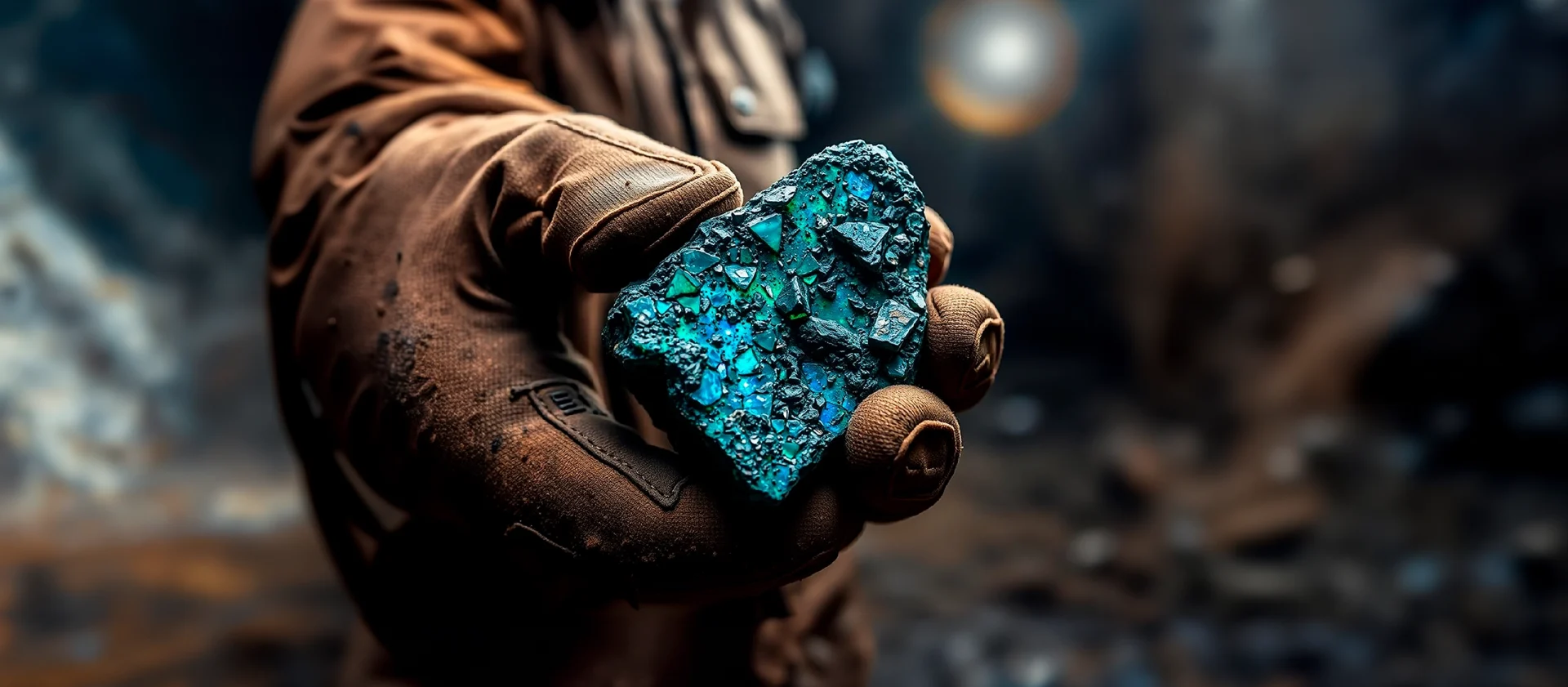
Rare earths are a group of 17 metals: the 15 lanthanides, along with scandium, and yttrium. These metals possess unique magnetic and electronic properties, making them essential for manufacturing powerful magnets used in a wide range of technology-driven products, including smartphones, electric vehicles, and F-35 fighter jets. Given their use cases, global demand for these minerals is expected to increase by more than 60% by 2040, according to the International Energy Agency (IEA).1
Despite their name, rare earths are not rare in geological terms; in fact, elements like cerium and neodymium are more abundant in the Earth’s crust than gold or silver. However, they are considered “rare” because they are seldom found in concentrated, economically viable deposits, making them difficult and costly to mine and refine. Certain rare earths are often extracted as byproducts of radioactive mining operations for uranium and thorium. Although large rare-earth deposits do exist in developed countries like the US and Australia, production remains limited due to environmental concerns and technical challenges.
Such limitations have provided China, a largely centrally planned economy, with significant advantages. By leveraging decades of government subsidies and strategic investment to support both mining and downstream processing, China has amassed enormous control over the global rare-earth value chain, spanning production, separation, and magnet fabrication.
Rare Earth Elements (REE) Demand by Use
New-age sectors set to drive demand surge
| Category | 2023 | 2050 | ||
| Demand ('000 tonnes) | Share (%) | Demand ('000 tonnes) | Share (%) | |
| Clean Energy | 16 | 17.2 | 57 | 31.7 |
| Electric Vehicles | 7 | 7.5 | 40 | 22.2 |
| Wind | 10 | 10.8 | 17 | 9.4 |
| Other Uses | 60 | 64.5 | 66 | 36.7 |
| Total Demand | 93 | 100 | 180 | 100 |
Source: GQG Partners LLC (chart). International Energy Agency, Global Critical Mineral Outlook 2024 (data). Actual results may differ from any projections illustrated above.
Although rare-earth elements play a critical role in both military and industrial applications, the global market for these materials remains relatively small, with annual sales totaling less than $4 billion.2 Nevertheless, their ubiquitous application has allowed China to wield outsized influence on the global stage. For the US and its allies, this dependence on a single supplier for such essential resources poses significant risks, including supply chain vulnerabilities, economic instability, and threats to national security.
Even official data only partially reflects the extent of the US’s reliance on China, in our view. According to the IEA, while China accounted for “only” about 70% of global rare-earth extraction in 2024, it controls more than 90% of the downstream value chain, including oxide separation, metal refining, and magnet production.3 Notably, China holds a monopoly on the separation of two rare-earth elements—dysprosium and terbium—critical for manufacturing permanent magnets capable of withstanding high temperatures. These magnets are key components in F-35 jet actuators, Tesla’s humanoid robots, and Virginia-class submarines.
In the spring of 2025, Corporate America learned this lesson the hard way.
After President Trump announced reciprocal tariffs on China, Beijing retaliated in April by restricting exports of seven critical elements, as well as magnets made with them. The situation escalated further in October when additional bans on more metals were imposed, along with the introduction of extraterritorial licensing mandates. The abrupt disruption in the supply of rare-earth magnets led to the temporary closure of Ford’s Chicago factory for weeks in June4 and left many US companies scrambling to secure supplies.
Who Controls Rare Earths?
A global comparison
| Country | % of global refining | % of global mining | % share of global reserves |
 China China | >90 | 69% | 49 |
 United States United States | <5 | 12% | 2 |
 Australia Australia | 500% | 3% | 6 |
 India India | 100% | Negligible | 8 |
 Russia Russia | Negligible | Negligible | 4 |
 Brazil Brazil | Negligible | Negligible | 23 |
Source: GQG Partners LLC (chart; data for refining). EY Economy Watch Report (data for mining and reserves). Data as of 2024.
However, tensions paused with the Kuala Lumpur Accord late that month, as both sides agreed to suspend the fresh strangulations for one year. While the ceasefire halts the immediate crisis, the rare-earth saga remains unsolved.
In this paper, we will examine the origin of China’s dominance in rare earths, its economic and strategic impacts, and the broader implications for investments.
CHINA’S VAST DISCOVERY
China’s rise to dominance in the rare-earth market began with massive overproduction, flooding global markets with cheap products and driving out competitors. Over time, Beijing shifted to a more strategic approach: They focused on conserving domestic resources and consolidating industry power, ultimately enabling them to wield rare earths as a geopolitical weapon.
In the 1950s, while exploring the Bayan Obo mine in the Inner Mongolia Autonomous Region, Chinese geologists made a groundbreaking discovery of vast reserves of rare-earth elements. Initially believed to be an iron deposit, Bayan Obo was revealed to contain the world’s largest rare-earth reserves, exceeding 100 million metric tons. This discovery marked a pivotal moment for China, prompting then-leader Deng Xiaoping to famously declare in 1992, “The Middle East has oil; China has rare earths.” Supported by strong policy and government resources, production and operations at the Bayan Obo mine accelerated rapidly.5
In 1994, as part of sweeping economic reforms, China introduced a value-added tax (VAT) policy that offered rare-earth exporters rebates of up to 17%. These generous VAT rebates, combined with relaxed environmental regulations and low labor costs, created powerful incentives for domestic producers to ramp up output. The policy not only benefited large state-owned enterprises (SOEs) but also encouraged smaller and unregulated producers to exploit the tax rebates, further driving production.6 As a result, China’s rare-earth production surged by nearly 500% from 1985 to 1995, exceeding the rest of the world combined.7
China’s Rare Earth Dominance
THE RETREAT BY THE WEST
China’s dominance in rare-earth production was also aided by past policy shifts by Western governments. During the commodities bust of the 1980s recession, Western leaders began to view natural resource security, particularly the supply of critical materials, as a challenge relegated to the past. The Reagan administration chose to let market forces dictate outcomes and refused to subsidize mineral production, even for defense purposes. Between 1993 and 2005, the US Department of Defense (DoD) sold off more than 75% of the nation’s rare-earth stockpile.8
Additionally, in the 1980s, the US Nuclear Regulatory Commission (NRC) and the International Atomic Energy Agency (IAEA) reclassified “nuclear source material” to include substances containing over 0.05% thorium or uranium. This reclassification imposed stringent regulations on heavy rare-earth elements, often found alongside those materials. Consequently, Western resource developers began avoiding deposits containing radioactive materials, despite these deposits accounting for 40% of global rare-earth production at the time.9
Alongside more stringent nuclear policy, environmental regulations made mining rare earths increasingly difficult. In 1998, Molycorp Inc., then owned by Unocal Corp., was forced to shut down its rare-earth mine in Mountain Pass, California, and pay a $410,000 fine for leaking what the Environmental Protection Agency (EPA) termed “low-level radioactive waste.”10 At the time, it was believed that the Mountain Pass mine was the second largest rare-earths deposit in the world and the only producer in the US.
These policy and regulatory decisions led US government agencies and companies to transfer rare-earth processing capabilities to China, inadvertently paving the way for China’s dominance in separation and production. A notable example occurred in 1995, when General Motors Company sold its Magnequench division to a group of investors that included Chinese firms. Headquartered in Valparaiso, Indiana, Magnequench was once considered the best rare-earth magnets producer in the world and served as a trusted strategic supplier to the US Army for decades. This landmark sale transferred technology and intellectual property associated with rare-earth magnets to China.11
FROM EXTRACTION TO INDUSTRIAL POLICY
In the 2000s, Beijing began to recognize the drawbacks of excessive rare-earth production, including resource depletion and plummeting metal value. In response, China reduced VAT rebates for rare-earth exports and introduced a quota system instead. Export quotas were cut from 65,000 tons in 2005 to 30,996 tons in 2010, a nearly 40% reduction.12
Given that China had already supplied 97% of the world’s rare earths, the cuts triggered global backlash. To make matters worse, for two months in 2010, China halted rare-earth shipments to Japan amid a maritime dispute, sparking panic among Japanese manufacturers grappling with supply shortages. The sharp rise in rare-earth element prices during the embargo on Japan underscored China’s market dominance and highlighted its willingness to leverage these resources as a geopolitical tool.
Shocked by its vulnerability, Japan took steps to lessen its reliance on China. These efforts included investing in Australia’s Lynas Corp., the largest rare-earth producer outside China, initiating new mining projects in other countries, accumulating stockpiles, and advancing recycling technologies. By 2012, Japan successfully cut its dependence on Chinese rare earths from over 90% to under 60%.13
In 2014, in a case brought by the US, EU, and Japan, the World Trade Organization (WTO) ruled against China, finding it had breached free trade rules by limiting supply and inflating prices. Following the decision, in January 2015, China eventually dropped its export restrictions.14
This ultimately proved to be a disaster in disguise for the West. Before the WTO ruling, higher rare-earth prices driven by Chinese restrictions enabled US and European mining companies to raise capital based on optimistic revenue outlooks. For instance, Chevron Corp., which acquired Unocal in 2005, successfully spun off Molycorp as a public company in 2008, benefiting from the favorable market conditions at the time. However, after China removed export controls, rare-earth prices plummeted globally, driving Molycorp into bankruptcy in 2015 and pushing Lynas to the brink of collapse.15

“CAPITALISM DOESN’T WORK”
Over time, Beijing has further refined its rare-earth strategy, expanding its control across the entire supply chain from mining to refining and magnet production. This supply chain has become a cornerstone of China’s industrial policies, driving the development of high-technology industries, such as EV and solar, and preserving jobs domestically. Rare earths have emerged as a vital component of the nation’s broader industrial ambitions. In 2013, Gan Yong, head of the China Society of Rare Earths, succinctly articulated China’s longstanding approach: “The real value of rare earths is realized in the final product.”16
As part of its industrial policy, the Chinese government actively offers a range of subsidies to attract domestic manufacturers, granting them unrestricted access to China’s vast rare-earth resources. These incentives include low-interest loans from state-owned banks, financial grants, free land, reduced energy costs, and other forms of support designed to strengthen its position as a global hub for rare-earth production and utilization.17
“Capitalism doesn’t work in an industry that is very small and dominated by state capital,” said Constantine Karayannopoulos, former Chief Executive Officer at Neo Performance Materials, a Canadian mining company that operates several subsidiaries in China. He added that China’s leverage also stems from the fact that it is both the biggest consumer and producer of rare-earth elements.
Beyond varying levels of government support, China and the US also have a striking talent gap in rare-earth research. China boasts 39 research institutes dedicated to training rare-earth specialists, while the US only has a few, such as the Ames Laboratory in Ames, Iowa. Additionally, China files approximately 30 rare-earth patents for every one filed by the US. This disparity is further perpetuated by government investment: for every US government-funded researcher focusing on rare earths, China supports around 120.
As Guillaume Pitron, researcher and producer of the documentary The Rare Metal War, said, “Let’s face it: the Chinese-US tensions over rare earths are not simply an economic war; they reflect, more profoundly, a rift between two opposed governance models.”18
THE QUEST TO SHAKE OFF DEPENDENCY
For now, tensions have eased. Following a leadership meeting in October between President Trump and Xi Jinping, China agreed to suspend its latest export controls along with its licensing mandates for one year on rare earth elements, including holmium, erbium, thulium, europium, and ytterbium. In exchange, the US will reduce tariffs on Chinese imports.
For more than 15 years, the US and its allies have been aware that their critical mineral supply chains are overly concentrated, highly fragile, and heavily reliant on Chinese influence and control. In 2010, following the alarming prospect of being cut off from China’s rare-earth supplies, the Japanese government invested millions of dollars to eliminate dysprosium— an element whose separation is entirely dependent on China—from the NdFeB magnet, the most powerful commercially available permanent magnet. Japanese researchers dedicated years to reducing the dysprosium content from 10% to 3%, but even with this progress, it would take several more years of testing to fully implement the changes. Moreover, this effort was dwarfed by the surging demand for these magnets.19
Replacing these critical materials remains an extraordinary challenge, as evidenced by some of the most innovative US companies. For example, on March 8, 2023, during an industry event, Tesla Inc. made a bold announcement about its plans to “eliminate the use of rare earths,” a statement that triggered a 5%-10% selloff among publicly traded Chinese rare-earth producers.20
However, Tesla’s subsequent actions underscore the complexity and limitations of this transition. In April, the company acknowledged that China’s export restrictions were impacting production, highlighting the ongoing reliance on these essential materials. In the end, even trailblazing leaders like Elon Musk have faced difficulties in securing dependable suppliers or viable substitutes for rare earths.
Tesla is not alone in facing this challenge; virtually all major Western manufacturers that depend on these critical materials have been struggling to secure reliable supplies since China’s export ban in April 2025. Its total shipments of rare-earth magnets fell 74% in May from the same period a year earlier. The pain has become particularly acute across the automotive, electronics, and defense sectors.21
However, some companies are more prepared. General Motors has diversified its rare-earth sourcing through 2021 investments in US-based suppliers, while advancing low-rare-earth motor technologies with partners to insulate against Chinese export curbs. Toyota, drawing from Japan’s 2010 embargo response, maintains strategic stockpiles, recycles magnets in-house, and secures long-term contracts with Australian miners like Lynas.
Following the London talks in June 2025, Washington and Beijing announced a new trade framework under which China agreed to gradually restart the approval process for rare-earth export licenses over the next six months. While US officials publicly lauded the agreement as a diplomatic breakthrough, manufacturers across the globe remain frustrated by the slow and complex bureaucracy surrounding the approval process for these critical materials.
Meanwhile, Beijing appears to be positioning itself to maximize its leverage in the rare-earth sector. It has developed a tracking system for its rare-earth sector, which became operational in June. Even before the latest control measures, exporters were already required to secure licenses from the Ministry of Commerce for specific medium and heavy rare-earth materials, citing their “dual use” significance in both defense and high-tech industries. As part of this process, China meticulously vets buyers, demands detailed end-use documentation, and tightly controls shipments to ensure they are not diverted—particularly for US military applications.22

In addition to controlling exports, China is taking steps to safeguard its intellectual capital in the rare-earth industry. Aiming to prevent the leakage of trade secrets and technical expertise to foreign competitors, authorities have begun cataloging rare-earth experts and imposing restrictions on their international travel.
In the US, the DoD is spearheading efforts to reduce reliance on foreign sources for critical defense materials, with an ambitious goal of achieving supply chain independence by 2027. Since 2020, the DoD has invested over $439 million into strengthening domestic rare-earth supply chains, supporting key initiatives led by companies such as MP Materials, Lynas USA, and E-VAC Magnetics. In addition, the US government has backed innovative companies like REEcycle, Inc., which focuses on recovering rare earths from recycled materials.23
In early July 2025, the DoD made a bold move to help enhance US rare-earth magnet production and reduce reliance on China. The US government promised to take a new $400 million equity stake in MP Materials, provide a 10-year floor price, and agree to purchase 100% of its rare-earth magnets. An additional $150 million was provided by the DoD to support MP’s efforts to separate heavy rare-earth elements—one of the most challenging bottlenecks in the supply chain.24
Michael Rosenthal, founder and Chief Operating Officer of MP Materials, expressed confidence in their ability to produce high-quality magnets that meet the majority of US demand. “There’s significant talent outside of China to support us and others to grow,” he remarked, emphasizing the global expertise available to help scale domestic production.
Rosenthal also noted that achieving complete independence from China is not an immediate necessity. While companies like MP and Lynas may not yet match their Chinese counterparts in terms of cutting-edge technology or cost efficiency, “the market needs to see signs of success,” he said, underscoring the importance of incremental progress in building a resilient supply chain.
A DEFINING ERA FOR RARE EARTHS
The rare-earth challenge extends beyond money, ambition, or ingenuity—it revolves around deeply entrenched supply chain complexities, formidable technical barriers, regulatory hurdles, and China’s decade-long head start. Built through decades of government subsidies and strategic investment, China has amassed enormous control over the global rare-earth value chain, spanning production, separation, and magnet fabrication.
After the recent disruptions, global leaders are growing increasingly conscious of the strategic risks tied to relying on China’s supply of rare earths and magnets. In order to break China’s dominance, the US has already reached out to countries, including Australia, Canada, Brazil, and Pakistan, to secure rare-earth supplies.
Meanwhile, the US government is also taking deliberate steps to internalize and diversify its supply chain. A recent example is the landmark MP Materials deal, which signals a clear intent to reshape the industry. This public-private partnership structure not only mitigates commercial risks for MP Materials but also unlocks long-term financing options, enabling the company to make critical investments needed to reshore strategic capacity.
At GQG, we believe the rare-earth industry is entering a defining decade. Over the next three to five years, the US is expected to remain reliant on China for the majority of its rare earths and magnets—key components essential to EV, robotics, defense systems, and renewable energy infrastructure.
For investors, we believe capital allocation in a broad range of industries where rare earths are used now demands a nuanced perspective that integrates trade policy, domestic industrial strategy, and the competitiveness of alternative solutions in the market.
While overcoming China’s dominance in the short term remains a formidable challenge, the Trump administration has demonstrated a clear commitment to addressing this issue through its recent actions. By encouraging sustained, strategic, and cooperative efforts, supported by forward-thinking industrial policies, we believe the foundation is being laid for a resilient rare-earth ecosystem outside of Chinese influence that has the potential to thrive in the decades to come.
At GQG we focus on companies with reliable profits, quality balance sheets, and dynamic business models that can withstand global shifts. The growing importance of rare earths is evident in their use across a wide range of industries, including chips, electric vehicles, defense systems, and other electronics produced by businesses globally. We believe that rare-earth dependencies test the quality and risk management of many global companies.
END NOTES
1International Energy Agency. “Global Critical Minerals Outlook 2025: Rare Earth Elements.” May 2025.
2Fortune Business Insights. “Rare Earth Elements Market Size, Share & Industry Analysis, By Type (Lanthanum, Cerium, Neodymium, Praseodymium, Samarium, Europium, Others), By Application (Magnets, Metallurgy, Batteries, Polishing Agent, Glass and Ceramics, Catalyst, Phosphors, and Others) and Regional Forecast, 2024-2032.” 14 July 2025.
3Bradsher, Keith. “What to Know About China’s Halt of Rare Earth Exports.” The New York Times. 3 June 2025.
4Foote, Brett. “Ford Explorer Production Temporarily Paused Over Rare Earth Magnet Shortage.” Ford Authority. 30 May 2025.
5Bradsher, Keith. “China’s Rare Earth Origin Story, Explained.” The New York Times. 5 July 2025.
6Hui, Mary. “How China uses tax policies to defend its rare earths monopoly.” Quartz. 20 July 2022.
7Park, Sulgiye. Tracy, Cameron L. Ewing, Rodney C. “Reimagining US rare earth production: Domestic failures and the decline of US rare earth production dominance – Lessons learned and recommendations.” Science Direct. Resources Policy. 13 August 2023.
8Abraham, David S. “The Elements of Power: Gadgets, Guns and the Struggle for a Sustainable Future in the Rare Metal Age.” Yale University Press. 25 April 2017.
9Encarnacao, Jack. Lewis, Raphael J. “Retake on Double Take: Rare Earths.” BNY Investments Newton. 13 June 2023.
10National Park Service. “Chapter Eight: Resource Management.” Mohave Administrative History.
11St. Clair, Jeffrey. “The Saga of Magnequench.” Counter Punch. 7 April 2006.
12Tse, Pui-Kwan. “China’s Rare-Earth Industry.” United States Geological Survey. 22 February 2011.
13Terazawa, Tatsuya. “How Japan Solved Its Rare Earth Minerals Dependency Issue” World Economic Forum. 13 October 2023.
14Office of the United States Trade Representative. “United States Wins Victory in Rare Earths Dispute with China: WTO Report Finds China’s Export Restraints Breach WTO Rules.” 26 March 2014.
15Lo, Chris. “The false monopoly: China and the Rare Earths Trade.” Mining Technology. 19 August 2015.
16Abraham, David S. “The Elements of Power: Gadgets, Guns and The Struggle for a Sustainable Future in the Rare Metal Age.” Yale University Press. 25 April 2017.
17Rare Earth Exchanges. “The Structure and Industrial Policy of China’s Rare Earth Element Industry.” 17 November 2024.
18Kennedy, James. Et al. “China Rare Earth Subsidies Structural Advantages.” Three Consulting. 8 March 2024.
19Abraham, David S. “The Elements of Power: Gadgets, Guns and The Struggle for a Sustainable Future in the Rare Metal Age.” Yale University Press. 25 April 2017.
20Bloomberg. “Tesla comments spur plunge in China rare-earth miner shares.” Creamer Media’s Mining Weekly. 3 March 2023.
21Lv, Amy. Woo, Ryan. “China’s rare earth magnet shipments halve in May due to export curbs.” Reuters. 19 June 2025.
22Reuters. “China’s rare earth export controls are good for Beijing, bad for business.” 7 July 2025.
23Lopez, Todd C. “DOD Looks to Establish ‘Mine-to-Magnet’ Supply Chain for Rare Earth Materials.” United States Department of Defense. 11 March 2024.
24Kalia, Katha. Onstad, Eric. Scheyder, Ernest. “MP Materials Seals Mega Rare-Earths Deal with US to Break China’s Grip.” Reuters. 10 July 2025.
IMPORTANT INFORMATION
This document may be distributed by GQG Partners LLC and its affiliates (collectively “GQG”).
The information provided in this document does not constitute investment advice and no investment decision should be made based on it. Neither the information contained in this document or in any accompanying oral presentation is a recommendation to follow any strategy or allocation. In addition, neither is it a recommendation, offer or solicitation to (i) sell or buy any security, (ii) purchase shares in any investment fund that GQG may sponsor, offer or manage, (iii) establish any separately managed account, or (iv) implement any investment advice. It should not be assumed that any investments made or recommended by GQG in the future will be profitable or will equal the performance of any securities discussed herein. Before making any investment decision, you should seek expert, professional advice, including tax advice, and obtain information regarding the legal, fiscal, regulatory and foreign currency requirements for any investment according to the law of your home country, place of residence or current abode.
This document reflects the views of GQG as at a particular time. GQG’s views may change without notice. Any forward-looking statements or forecasts are based on assumptions and actual results may vary.
GQG provides this information for informational purposes only. GQG has gathered the information in good faith from sources it believes to be reliable, including its own resources and third parties. However, GQG does not represent or warrant that any information, including, without limitation, any past performance results and any third-party information provided, is accurate, reliable, or complete, and it should not be relied upon as such. GQG has not independently verified any information used or presented that is derived from third parties, which is subject to change. Information on holdings, allocations, and other characteristics is for illustrative purposes only and may not be representative of current or future investments or allocations.
The information contained in this document is unaudited. It is published for the assistance of recipients, but is not to be relied upon as authoritative and is not to be substituted for the exercise of one’s own judgment. GQG is not required to update the information contained in these materials, unless otherwise required by applicable law.
The contents of this document are confidential and intended solely for the recipient. No portion of this document and/or its attachments may be reproduced, quoted or distributed without the prior written consent of GQG.
GQG is registered as an investment adviser with the U.S. Securities and Exchange Commission. Please see GQG’s Form ADV Part 2, which is available upon request, for more information.
Any account or fund advised by GQG involves significant risks and is appropriate only for those persons who can bear the economic risk of the complete loss of their investment. There is no assurance that any account or fund will achieve its investment objectives. Accounts and funds are subject to price volatility and the value of a portfolio will change as the prices of investments go up or down. Before investing in a strategy, you should consider the risks of the strategy as well as whether the strategy is appropriate based upon your investment objectives and risk tolerance.
There may be additional risks associated with international and emerging markets investing involving foreign, economic, political, monetary, and/or legal factors. International investing is not for everyone. You can lose money by investing in securities.
Past performance may not be indicative of future results. Performance may vary substantially from year to year or even from month to month. The value of investments can go down as well as up. Future performance may be lower or higher than the performance presented, and may include the possibility of loss of principal. It should not be assumed that recommendations made in the future will be profitable or will equal the performance of securities listed herein.
GQG Partners LLC is a wholly owned subsidiary of GQG Partners Inc., a Delaware corporation that is listed on the Australian Securities Exchange (ASX: GQG). GQG Partners LLC and its affiliates provide certain services to each other.
NOTICE TO RECIPIENTS IN AUSTRALIA & NEW ZEALAND
The information in this web page is issued and approved by GQG Partners LLC (“GQG”), a limited liability company and authorised representative of GQG Partners (Australia) Pty Ltd, ACN 626 132 572, AFSL number 515673. This information and our services may be provided to wholesale and retail clients (as defined in section 761G of the Corporations Act 2001 (Cth)) domiciled in Australia. This web page contains general information only, does not contain any personal advice and does not take into account any prospective investor’s objectives, financial situation or needs. In New Zealand, any offer of a Fund is limited to ‘wholesale investors’ within the meaning of clause 3(2) of Schedule 1 of the Financial Markets Conduct Act 2013. This information is not intended to be distributed or passed on, directly or indirectly, to any other person.
NOTICE TO RECIPIENTS IN CANADA (Alberta, British Columbia, Manitoba, New Brunswick, Nova Scotia, Ontario, Québec, Saskatchewan (the “Canadian Jurisdictions”))
GQG Partners LLC relies on the (i) international adviser exemption pursuant to section 8.26 of NI 31-103 in each of the Canadian Jurisdictions, and (ii) non-resident investment fund manager exemption pursuant to section 4 of MI 32-102 in Ontario and Québec and is not registered as an adviser or investment fund manager in the Canadian Jurisdictions.
This web page has been prepared solely for information purposes and is not an offering memorandum or any other kind of an offer to buy or sell or a solicitation of an offer to buy or sell any security, instrument or investment product or to participate in any particular trading strategy. It is not intended and should not be taken as any form of advertising, recommendation, investment advice or invitation to trade. This information is confidential and for the use of the intended recipient only. The distribution of this web page in Canada is restricted to recipients who are qualified “permitted clients” for purposes of National Instrument 31-103 Registration Requirements, Exemptions and Ongoing Registrant Obligations. This information may not be reproduced, redistributed or copied in whole or in part for any purpose without the prior written consent of GQG. Upon receipt of this information, each Canadian recipient hereby confirms having expressly requested that all information evidencing or relating in any way to the information described herein be drawn up in the English language only. Par la réception de ce document, le détenteur au Canada de celui-ci confirme par les présentes avoir expressément exigé que tous les documents faisant foi ou se rapportant de quelque manière que ce soit aux informations présentées dans ce document soient rédigés en anglais seulement.
NOTICE TO RECIPIENTS IN SOUTH AFRICA
GQG PARTNERS LLC is an authorised financial services provider in the Republic of South Africa and regulated by the Financial Sector Conduct Authority (FSCA) with FSP number: 48881. Investors should take cognisance of the fact that there are always risks involved when buying or selling any financial product. Past performance of a financial product is not necessarily indicative of future performance. The value of financial products can increase as well as decrease over time, depending on the value of the underlying securities and prevailing market conditions. The investment value of a financial product is not guaranteed, and any illustrations, forecasts or hypothetical data are provided for illustrative purposes only. This web page does not constitute financial advice, a solicitation, invitation or investment recommendation. Prior to selecting a financial product or investment, it is recommended that South African based investors seek and obtain specialised financial, legal and tax advice.
NOTICE TO RECIPIENTS IN THE UNITED KINGDOM
GQG Partners LLC is not an authorised person for the purposes of the Financial Services and Markets Act 2000 of the United Kingdom (“FSMA”) and the distribution of this web page in the United Kingdom is restricted by law. Accordingly, this web page is provided only for and is directed only at persons in the United Kingdom reasonably believed to be of a kind to whom such promotions may be communicated by a person who is not an authorised person under FSMA pursuant to the FSMA (Financial Promotion) Order 2005 (the “FPO”). Such persons include: (a) persons having professional experience in matters relating to investments; and (b) high net worth bodies corporate, partnerships, unincorporated associations, trusts, etc. falling within Article 49 of the FPO. The services provided by GQG Partners LLC and the investment opportunities described in this web page are available only to such persons, and persons of any other description may not rely on the information in it. All, or most, of the rules made under the FSMA for the protection of retail clients will not apply, and compensation under the United Kingdom Financial Services Compensation Scheme will not be available.
GQG Partners (UK) Ltd. is a company registered in England and Wales, registered number 1175684. GQG Partners (UK) Ltd. is an appointed representative of Sapia Partners LLP, which is authorised and regulated by the Financial Conduct Authority (“FCA”) (550103).
NOTICE TO RECIPIENTS IN ADGM
GQG Partners Ltd, a company limited by shares, registered in Abu Dhabi Global Markets (“ADGM”), having its address at Unit No. 1 and 2, Floor 14, Al Maryah Tower, Abu Dhabi Global Market Square, Abu Dhabi, Al Maryah Island, United Arab Emirates. GQG Partners Ltd is licensed by the ADGM’s Financial Services Regulatory Authority (FSRA) (license number 240015). GQG Partners Limited is licensed by the ADGM’s Financial Services Regulatory Authority (FSRA) to conduct the regulated activities of Managing a Collective Investment Fund, Advising on Investments or Credit, Arranging Deals in Investments, Managing Assets, Shari’a-compliant Regulated Activities. This web page is intended for distribution only to persons of a type specified in the FSRA’s Rules (i.e., “Professional Clients”) and must not be delivered to or relied on by any other type of person. It is for the exclusive use of the persons to whom it is addressed and in connection with the subject matter contained therein. The FSRA, or any other regulatory authority, has no responsibility for reviewing or verifying this web page or any other information in connection with it. Accordingly, the FSRA, or any other regulatory authority, neither approved this information or any other associated information nor taken any steps to verify the information set out in this web page and has no responsibility for it.
© 2025 GQG Partners LLC. All rights reserved. This document reflects the views of GQG as of October 2025.
